
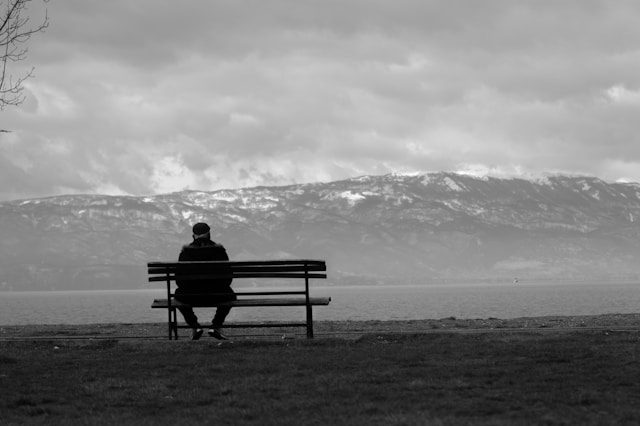


Are you lonely?
Have you noticed an epidemic of loneliness among autistic adults? So many of my clients struggle with loneliness, even while they ache for positive relationships in their life, and I see this all over the autistic corners of the Internet as well. But why?
Hi, this is Heather from Autism Chrysalis.
Let me see if I can encapsulate this.
As an autistic coach, I see this pattern all the time, (as well as having lived through it myself as an Autistic person).
Disclaimer, this is going to be over-generalized, and not everyone is going to fit all of these specifics, but the pattern is pretty consistent, allowing for variations among individuals.
Here goes:
Growing up unaccepted
Most of us grew up in a less than 100% unconditionally accepting environment, and were taught, explicitly or implicitly, that we needed to suppress some of our natural traits, or to conform in order to gain acceptance, teaching us to mask or camouflage parts of ourselves. Sometimes that was autistic traits, sometimes other parts of personality or special interests.
(To be fair, there’s a certain amount of learning to fit a culture’s expectations and societal norms for politeness that is reasonable and healthy for people living in groups to get along. But we tend to get more than the usual dosage.)
So when we did make some friends as kids, it wasn’t us being fully genuine, or to the extent that we were, it was only with a very limited set of people, and often friendships ended in painful and confusing circumstances.
This leads to a complex and painful history with relationships, and means that we often didn’t have more than a few experiences of genuine friendship, and so we have very little basis for what a healthy interpersonal relationship is like. So we don’t develop comfort with healthy relationship skills, like how to make friends (which takes repeated, frequent practice to get good at, just like any other skill).
And because our senses and attention and interests tend to be more intense than the perceived norm, things like attending college, or holding down a job, parenting, or pursuing a personal project, tend to be all-consuming. We don’t have a whole lot of capacity left for more than one major focus in our life at a time. And relationships get sacrificed.
Finding yourself alone
But at some point, often at several points throughout life, we look up from our all-consuming daily routine and notice that we don’t have the kind of close connections that people talk about, and that we’re really pretty lonely. And yet the thought of spending the energy to go out of our way to take a chance on maybe finding a new friend at some social gathering, seems like a huge gamble of our limited energy for very low chances of success.
We look up from our all-consuming daily routine and notice that we don’t have the kind of close connections that people talk about, and that we’re really pretty lonely.
And even if we do take the gamble, and get lucky and find someone who we might be friends with, we don’t have a lot of experience with starting new friendships, and so have poor skills in that area. We tend to either come on too strong, or misinterpret things, like how long it takes them to return a text, or grant them the benefit of every possible doubt, explaining why it makes sense that they did or said whatever, and ignore red flags. Either way, we don’t have a great experience, and it reinforces the belief that there’s something fundamentally wrong with us, or that people can’t handle us.
We may even form part of our identity around being a loner, a maverick, an introvert, someone who doesn’t need many people. Which I believe is at least in part a defense mechanism to comfort the pain of loneliness by trying to make it out as a virtue.
And at some point, we may try unmasking, hoping that, counter to our lived experience, the Autistics on the Internet who say that it’s so wonderful to be accepted for who you are might be right, but despite attempts at therapy over the years, we still have all of these old trauma responses, and when we’re unmasking, it’s not unmasking a healthy and healed and quirk-ily wonderful version of ourselves, it’s unmasking a whole mess of trauma responses, and we end up spewing our pain onto the unsuspecting potential friend. So of course it goes badly and reinforces the belief that it’s not OK for us to unmask.
And so it feels safer and easier to stay home and be lonely and complain about being lonely, and how unfair the world is to Autistics, and that people will never accept us, and to fill online autistic groups with this kind of negativity, because it’s the only place where you find other people agreeing with you, but it also reinforces these beliefs that it’s just the way it is and it’s never going to change and we’re doomed to be lonely forever.
I’m curious, how much of this resonates with your experience?
Finding acceptance
And yet, I do want to end with a word of hope.
The way I see it, the real problem is not that we are “weird” or different from the perceived norm, or even that there are a lot of people who won’t accept us for who we are (that is true, and will probably always be true, but it doesn’t mean that we can’t find people who will accept us and have close and supportive friends).
I think what most gets in the way of forming those relationships is that, because we have this complex and painful relationship history, and the associated trauma responses, and because it’s so painful to look straight at that trauma and deal with it, it’s so much easier to avoid it and to blame then to do the work of healing.
Here’s another post I made that gets into that idea in more depth, it’s called “Why Finding Your Autistic Community Didn’t Fix Your Loneliness (The Truth No One Talks About)”.
But when you do that hard work (and yes, it sucks, but usually not as much as you expect it will), it becomes possible to start to learn healthier relationship skills, and to be able to unmask in healthy ways, to the right people, and then when you do encounter people who have also done their own healing and have the capacity to accept and enjoy people with your flavor of differences, there’s a real possibility for a healthy relationship to start and to build, and it works so much better than it ever has before.
And this is where you get those positive stories of people who have unmasked and it’s been a good experience.
If you want more on that idea, here’s a post on that: Don’t Look For New Friends Until You Do This.
I hope this helps understand what’s going on. What are your thoughts?
Wishing you a neurowonderful day.