
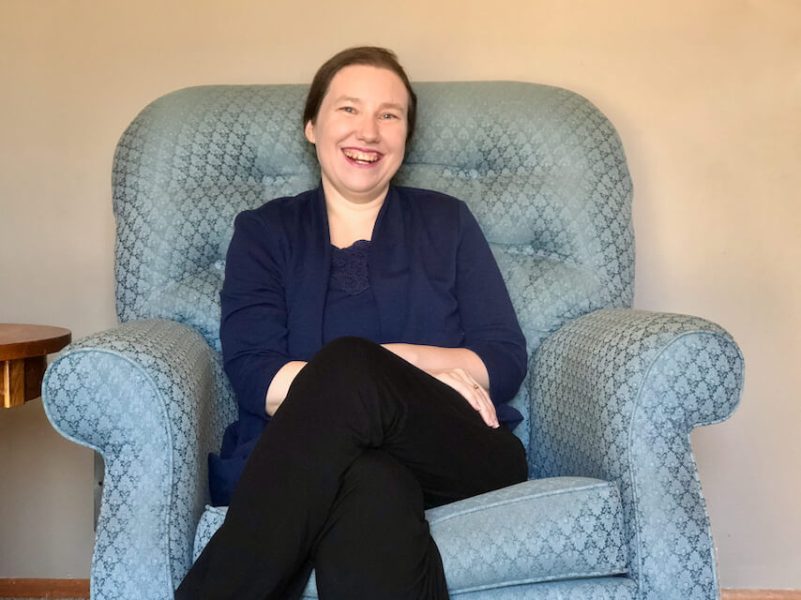
You deserve to know up front my views about autism, and how I approach the work of building an autism-positive life. So here’s what I think about autism and autism coaching.
It all revolves around this guiding principle:
This doesn’t mean that everything is perfect and there’s no room for growth, but that who you fundamentally are is worthy and doesn’t need to be fixed.
It is not a disorder, a disease, an abnormality. It is part of the natural range of neurological expression that has been present throughout the history of humanity.
The way our brains process information more analytically, the way our sensory systems are highly attuned to our environment, the way we socialize directly and openly, the way we tend towards justice and equality, and other common Autistic traits, are wonderful assets that the world needs more of.
The challenges we commonly struggle with, I believe, have more to do with the limitations of our modern society than with anything inherent to autism.
People who are quirky, weird, or “different” are often the most interesting people I know.
If everyone thought the same, behaved the same, and felt the same, human civilization would collapse under the weight of our focused stupidity.
When we think differently, look different, like different things, come from different places, speak different languages, when our bodies work in different ways, these and other differences lead to different perspectives.
When honored, these different perspectives challenge us to examine our assumptions; it is that liminal space that is the wellspring of innovation, creativity, art, science, relationships, beauty, and growth, leading to improvements that benefit far more people than those they originally intended to serve.
Many of us spend decades and either not knowing we are Autistic, or trying to deny the fact. Either way, when we put so much effort into being “like everyone else,” we are essentially denying who we truly are.
That pretense, whether subconscious or intentional, takes sooo much energy and attention to maintain. It is tiring and stressful. Over time that builds up and creates a whole host of problems, including feeling tired all the time, brain fog, executive dysfunction, anger, irritability, burnout, sickness, addiction as a coping strategy, poor relationships, and much more.
When you accept who you really are, what you really need, and what does and does not work for you (as opposed to what “should” work), you can come up with better strategies for communicating, socializing, working, living, and being who you are, even amidst systems that are not designed for us.
Neurotypical communication styles are not inherently better than Autistic styles. Autistic communication patterns are not a lesser, improper, or disordered version of how one “should” communicate. Autistic communication styles are valid in their own right.
I also believe that Autistics and non-Autistics (allistics) can learn to communicate with each other well and grow positive, mutually supportive relationships.
When people are open to the idea that their habituated patterns of communicating are not the only option, and are willing to set aside assumptions and expectations to openly discuss what they mean, and exchange thoughts and ideas in creative ways, all differences in communication styles and methods can be bridged so that people truly connect with each other.
Society tries to teach us that there is only a limited range of options for how to be in the world (generally along the lines of: go to school, get a job, get married, have kids, buy lots of stuff, work for decades, retire, die), but every possible rule has been broken, often by people that society deeply admires.
I won’t argue that every possible option is good or worthwhile, and some are flat out evil, but the range of options are not confined to either “normal” or “evil.”
Doing things that challenge society’s conventions and expectations is not inherently bad. It is sometimes necessary. And there is a lot right now that needs to be challenged. Starting with the thoughts in your head that tell you that it’s not okay to challenge expectations.
“One size fits all” education systems actually fit only a very narrow range of people.
Conformity-driven workplaces disregard differences in sensory needs, cognition, socialization, disability, etc.
But despite the messages these organizations often send us, we are not broken for not fitting their model. Rather, their model is limited and damaging.
We are perfectly capable of contributing meaningfully to make the world a better place when we are allowed—or take—opportunities to be our best selves.
When we begin to look for other options than the ones society has handed to us, we can find different ways of learning, working, living, loving, and thriving.
Some of those changes may be big, but more often they are small tweaks that make a big difference.
It can be uncomfortable not to have a clear path to follow, but if we can tolerate that uncertainty for a little while, and keep experimenting, adjusting, and refining, we can make a life that we love to life.
And we might just be blazing a path that others would love to follow.
However, most neurodivergent people have been taught to ignore, disregard, and discredit our instincts as part of fitting into a society that does not fit us well.
We begin to access that information by learning to make small choices that feel right and good inside, and those small adjustments add up over time, until all parts of your life feel right and good.
It’s not as much about learning, it’s mostly about unlearning.
Coaching, the way I do it—as taught by Martha Beck and informed by my own Autistic experience—helps you uncover the deep beliefs that you’ve been taught about yourself, that have been hurting you and holding you back, and gently question them to find out what parts are really true, and what parts are social conditioning.
As you unlearn each ableist belief, each bit of conditioning from your family, society, etc., new options will begin to emerge, and it will feel more possible to try out ways to make your life better, one tiny bit at a time.
It also takes unlearning the default defenses (like numbing, overwhelm, and reactivity) that are keeping you from being able to tell what you really want and need.
Which then leads to learning healthier strategies to deal with the things that will come up when you start to get in touch with what has been buried: like stress and anxiety and reactivity, and even strategies to communicate better with neurotypicals (yes this is possible), etc.
As you continue this process, you will be gradually, one bit at a time, be creating your Second Chance Life.
My role is to come alongside you in this process—to ask powerful questions, model how to deconstruct limiting beliefs and internalized neurotypical standards, and offer strategies and tools to work through the hard stuff.
I’ll validate that it’s okay to be you and help you learn to trust yourself enough to figure out your own answers. I’ll occasionally share my own experiences or resources when that’s useful.
The power of this process is in helping you figure out what works best for you. I’m not here to create dependence on me; I want to be useful during this transition and learning period, so that you can continue this process throughout your life on your own.
We never spam or sell.
Unsubscribe anytime.
I get it. It’s OK to take a while getting comfortable with me.
Or not.
In the meantime, take a look around.
Take a look at the selection of eBooks and DIY courses on targeted topics, that you can use at your own pace, as your energy allows.
Learn more about coaching with me, and then schedule a Clarity Session to meet and do a final check if we’re a good fit.